
Outsourced vs. In-House Fleet Maintenance: How to Decide

At some point, every growing fleet hits the same question: should we keep maintenance in-house, or hand it to an outside provider? There's no universal answer. But the decision gets much easier once you look at what each option really costs and what problems it actually solves.
What "in-house" really involves
Running maintenance in-house means your business owns the work. That usually includes:
- Technicians on payroll, plus benefits, training, and turnover
- A shop or bays, with lifts, tools, diagnostic equipment, and insurance
- Parts purchasing and inventory
- Someone managing the schedule, the records, and the technicians
- Compliance work, including inspections and the paperwork behind them
The upside is control. Your technicians know your vehicles, work only on your fleet, and can jump on a problem immediately. For large fleets with steady, predictable workloads, that control can be worth the fixed cost.
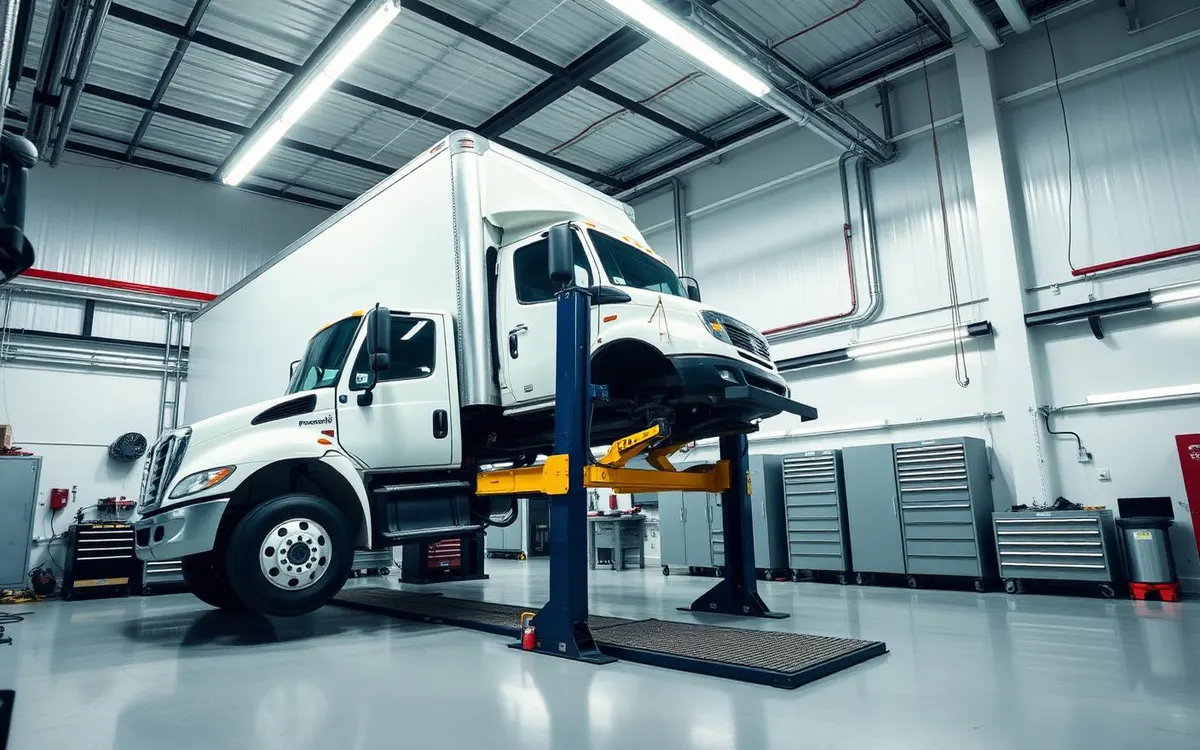
Where in-house maintenance gets hard
The problems usually aren't obvious until the fleet grows or changes:
- Uneven workload. Technicians are overloaded one month and underused the next, but payroll stays the same.
- Hiring and keeping technicians. Experienced fleet technicians, especially for diesel and heavy-duty work, are hard to find and easy to lose.
- Equipment gaps. A shop built for vans may not have what heavier trucks need, and the reverse.
- Coverage. Nights, weekends, vacations, and breakdowns at 2 a.m. all stretch a small team.
- Management time. Someone has to own the schedule and records, and that's often a fleet manager who already has a full-time job.
What outsourced fleet maintenance looks like
With outsourced fleet maintenance, an outside provider acts as your maintenance department. Done well, that means:
- A preventative maintenance program built for your vehicle classes and duty cycles
- Repairs, DOT inspections, and tire service under one account
- Service history filed by VIN and available to you
- One point of contact who owns the schedule, the quotes, and the escalations
- Roadside support when something goes wrong between visits
Outsourcing turns fixed costs, like payroll, equipment, and shop space, into a service you schedule. It also moves the management burden off your desk.
The questions that decide it
Work through these honestly and the answer usually becomes clear:
- How steady is your maintenance workload? Steady, high volume favors in-house. Uneven or growing volume favors outsourcing.
- Can you hire and keep the technicians you need? If heavy-duty or diesel skills are hard to staff, outsourcing that work removes the risk.
- Where do your vehicles spend downtime? If units lose hours driving to and waiting at a shop, on-site service may matter more than who employs the technician.
- Who owns the schedule today? If the honest answer is "nobody, really," outsourcing the program may fix more than the repairs.
- Are your records audit-ready? If inspection and repair records are scattered, a provider who files everything by VIN solves a real compliance problem.
The hybrid option
This doesn't have to be all or nothing. Many fleets keep light, daily work in-house (walkarounds, fluid checks, simple bulb changes) and outsource the rest: scheduled PM, inspections, brakes, tires, and heavy-duty and diesel repair. A hybrid setup keeps quick fixes close while removing the work that's hardest to staff and schedule.
How to evaluate an outsourced provider
If you're leaning toward outsourcing, ask any provider:
- Where does the work happen: at your location, or at their shop?
- Which vehicle classes do they service, and do they handle diesel and heavy-duty units?
- Who performs DOT inspections, and how are the records kept?
- Can you see service history by VIN whenever you want?
- Who is your day-to-day contact?
- What happens when a vehicle breaks down after hours?
- Can visits be scheduled around your operating hours?
Pay close attention to who does the actual work. Some fleet management companies route repairs to a network of third-party shops, which can be fine, but it means your day-to-day contact isn't the person working on your vehicles.
Where Boston Fleet Services fits
Boston Fleet Services is an outsourced maintenance department for commercial fleets across Massachusetts, New Hampshire, Maine, Rhode Island, and Connecticut. Our technicians work at your location on light, medium, and heavy-duty vehicles, including diesel. Units come to our Wilmington shop only when a repair needs a lift or shop equipment.
Every account has an account manager, inspections are performed by federally certified inspectors, and every visit is recorded by VIN so you can see the history online. Visits can run overnight, after hours, or on weekends, and 24/7 roadside dispatch covers the time between them.
Whether you want to hand over the whole program or just the work that's hardest to staff, call (781) 650-6551 to talk it through.
Need Professional Fleet Maintenance?
Contact Boston Fleet Services for expert mobile maintenance and repair services.